UHMWPE Armor Plates: Truth, Risks and Limitations

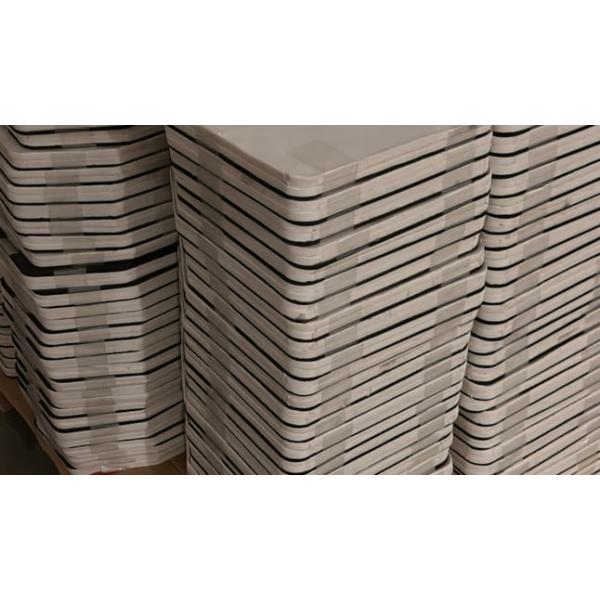
UHMWPE armor plates are often presented as a modern, lightweight and supposedly universal solution for body armor. This is where the main problem begins. Lightweight armor does not mean universal armor.
UHMWPE is a strong material. But only within its intended use. When those limits are ignored, the consequences become critical.
Available solutions can be found in the armor plates and ballistic inserts category.
What is UHMWPE
UHMWPE (Ultra-High Molecular Weight Polyethylene) is a polymer used in both soft ballistic inserts and rigid armor plates. Its main advantage is the combination of low density and high specific strength.
This is why it is widely used in applications where weight is a critical factor.
Two fundamentally different applications of UHMWPE
When analyzing UHMWPE in body armor, it is essential to separate two distinct categories:
- soft armor (ballistic inserts);
- hard armor (rigid plates).
These are fundamentally different systems and should not be evaluated the same way.
Soft armor: UHMWPE vs aramid
In soft armor, the primary materials are aramid fibers (Kevlar and similar) and UHMWPE (Dyneema and similar).
Aramid:
- higher flexibility due to woven structure;
- better heat resistance;
- better conformity to the body;
- sensitive to moisture.
UHMWPE:
- lighter weight;
- less sensitive to moisture;
- lower heat resistance;
- reduced flexibility.
The choice is a balance between comfort, weight and operating conditions.
Hard armor: UHMWPE as a separate class
In hard armor, UHMWPE is not competing with aramid. It forms a separate class alongside steel and ceramic plates.
- steel plates rely on strength and thickness;
- ceramic plates break the projectile core and dissipate energy;
- UHMWPE plates absorb and distribute energy.
This means UHMWPE is not a universal replacement for other materials.
Why UHMWPE armor plates became popular
The main reason is weight.
- less strain on the body;
- better mobility;
- comfort during long wear.
And this advantage is often the source of critical mistakes.
Where UHMWPE works well
- engineering and EOD tasks;
- lower-risk environments;
- weight reduction scenarios;
- combined armor systems.
Where UHMWPE becomes a weak solution
UHMWPE has critical limitations:
- armor-piercing rounds;
- hardened steel cores;
- high-velocity fragments;
- thermal exposure.
In these conditions, it is not the optimal material.
Temperature — the ignored factor
UHMWPE has low heat resistance. This is not theoretical — it is a real operational limitation.
Why 90% of the market misrepresents UHMWPE
The core issue is misrepresentation.
Users are sold:
- weight instead of protection;
- marketing instead of real use cases;
- universality instead of limitations.
UHMWPE is presented as a “modern solution” without explaining where it actually works.
The result:
- wrong gear selection;
- false sense of security;
- increased risk in real scenarios.
The problem is not the material. The problem is how it is sold.
Material comparison
| Material | Weight | AP Threat | Heat Resistance | Use Case |
|---|---|---|---|---|
| UHMWPE plate | Low | Weak | Low | Mobility |
| Ceramic plate | Medium | High | High | Combat |
| Steel plate | High | Depends | High | Specialized use |
Conclusion
UHMWPE is a strong material, but only within its niche.
It provides a weight advantage, but it does not replace ceramic armor in combat conditions.
Choosing armor is not about picking the lightest option. It is about choosing the right solution for the actual threat.
 Posted by